
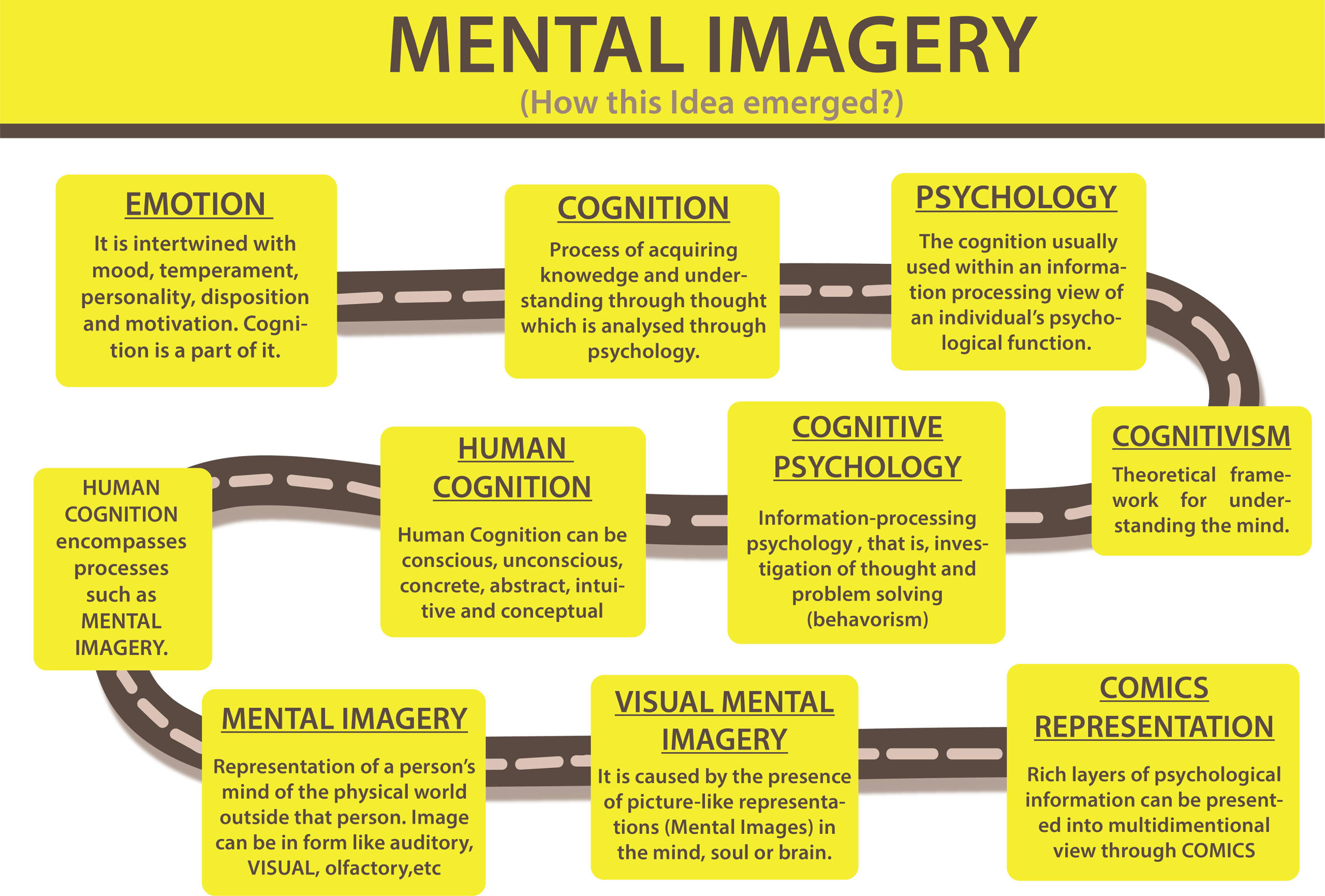
Imagination, the incredible power of our minds to recreate and innovate, is intricately tied to how we perceive the world around us. As cognitive science explores this fascinating phenomenon, researchers delve into the nuances of mental imagery, revealing how our imaginations often work like a finely tuned video game rather than a static picture. The complexity of visualization invites us to rethink the way we conceptualize creativity and its role in day-to-day thought processes. Interestingly, about 2-3% of the population experiences aphantasia, a condition where they cannot visualize images, yet they still engage in creative thinking and cognitive tasks effectively. These insights challenge traditional notions and demonstrate that imagination can thrive even in varied forms, underpinning our ability to conceptualize ideas that are outside of our immediate experience.
The art of envisioning possibilities often manifests in various forms such as conceptualization, creative daydreaming, and cognitive visualization. This multi-faceted understanding of our mental faculties allows for rich creative expressions, beyond the realms of mere visual representation. Terms like cognitive modeling and imaginative play resonate deeply when we think about how our minds process abstract ideas and scenarios. Even for those who do not possess vivid mental imagery, the brain’s ability to engage in imaginative thought is a remarkable testament to our innate creativity and mental flexibility. Exploring these alternatives paints a broader picture of how we can harness our imaginative capabilities for innovation and problem-solving.
The Science of Imagination: Understanding Mental Imagery
Imagination is a complex cognitive process that plays a critical role in how we create mental imagery. Cognitive science reveals that our minds tend to construct images in a hierarchical order, prioritizing essential elements over details. For instance, when imagining a scene, our cognitive faculties may first conceive of broader components such as a person or location, and only later refine those thoughts into specific details like color and texture. This approach underscores the notion that our imaginations often work in an economy of resources, as we selectively engage with imagery when prompted.
The scientific inquiry into imagination also delves into the nuanced interplay between visual perception and cognitive constructs. While some researchers maintain that imagination functions like a mental canvas where images are ‘painted’, others argue that it more closely resembles a conceptual framework where ideas are understood rather than visually represented. This distinction is crucial for understanding how imagination influences not only daily tasks but creative thinking and problem-solving across various fields.
Aphantasia: Redefining Visualization
Aphantasia presents a fascinating case in the study of imagination and mental imagery. Individuals with this neurological difference do not visualize images in their mind’s eye, which challenges conventional beliefs about the necessity of mental imagery for cognitive processes. Despite this lack of visual representation, research shows that those with aphantasia can engage in complex cognitive tasks effectively, demonstrating that visualization is not a prerequisite for mental processing. This revelation encourages a broader understanding of how imagination operates beyond visual confines.
For example, when a person with aphantasia is asked to imagine their home and count the windows, they may not visualize the space but still accomplish the task through alternative cognitive strategies. This suggests that the fundamental elements of cognition, such as memory and association, can function independently of visual imagery. Thus, exploring cases like aphantasia can significantly enrich our understanding of imagination and its essential role in creative thinking and cognitive science.
The Role of Hierarchical Thinking in Imagination
Hierarchical thinking plays an integral role in how we utilize our imagination. This cognitive strategy reflects the layered process through which we construct mental images or scenes. Cognitive scientists like Tomer Ullman propose that when tasked with imagining a scenario, individuals naturally outline the important components before filling in finer details. This method mirrors practices found in fields such as game design and animation, where creators establish structure and movement prior to intricate rendering.
Such hierarchical frameworks allow for fluidity in imaginative processes, enabling quicker access to relevant details when they become necessary. This efficiency in thought suggests that our cognitive abilities are optimized for problem-solving; rather than needing to visualize every aspect of an imagined scenario, our minds draw upon established patterns and associations to navigate complex ideas swiftly.
Imagination and Creative Thinking: Beyond Visual Limits
The link between imagination and creative thinking extends beyond mere visualization. Cognitive science suggests that imagination is not solely reliant on creating vivid mental images but can also involve abstract thinking and the synthesis of ideas. This understanding opens the door to various forms of creativity, allowing individuals to innovate without the need for visual imagery. Instead, they engage with concepts, relationships, and theoretical frameworks, which can yield equally valuable creative outputs.
This broader perspective on imagination encourages inclusivity within creative fields, recognizing that individuals approach problem-solving and idea generation from diverse cognitive styles. By acknowledging that imagination encompasses more than visual processing, we can foster environments that celebrate different creative methodologies, allowing for a richer exchange of ideas that benefit from various forms of cognitive engagement.
Lazy Evaluation in Imagination: Cognitive Efficiencies
The concept of lazy evaluation in cognitive science offers intriguing insights into how we process imagination and mental imagery. Just as computer algorithms optimize resource use by delaying calculations until absolutely necessary, so too does human imagination function with an economy of cognitive resources. This approach allows individuals to engage with imaginative tasks without the imperative to visualize every component until it is essential to the task at hand.
For instance, when imagining an ordinary object like a strawberry, a person may initially activate the conceptual understanding of its characteristics (such as knowing it’s red) without visualizing it in detail. This efficiency not only streamlines the cognitive process but also suggests that the richness of our imagination often resides in the underlying conceptual knowledge rather than in detailed visual representation. Such insights expand our understanding of imagination’s role in creative thinking and cognitive flexibility.
Cognitive Strategies: Visualizing Imaginative Scenarios
Imagining scenarios often involves the deployment of cognitive strategies that go beyond visual rendering. Individuals tend to construct narratives based on a framework of their knowledge while pinpointing specific relationships between elements in a scene. For example, when asked to visualize a person throwing a ball, one might not vividly picture the scene but rather understand the interaction, relying on previous experiences and learned knowledge.
This narrative-based approach enables a blend of creative thinking and mental imagery, where the focus could be on action, context, or emotion rather than purely visual details. Such strategies highlight how imagination allows us to explore possibilities without being misled by the confines of visual representation, empowering our problem-solving abilities and creative output.
Imagination Across Disciplines: Bridging Cognitive Science and Art
The interplay between imagination, cognitive science, and the arts offers a rich tapestry for interdisciplinary exploration. Artists and scientists alike engage with the fundamental nature of imagination, translating complex cognitive theories into practical applications. The insights from cognitive science regarding how imagination operates inform artistic practices, potentially leading to innovative techniques that enhance creative expression.
By examining processes such as mental imagery and hierarchical structures in thought, creators can refine their approaches to storytelling, design, and performance. This collaboration between fields encourages a dialogue that not only enriches both cognitive science and the arts but also broadens our understanding of how we navigate the imaginative landscape in various contexts.
The Evolution of Imagination: A Cognitive Perspective
The evolution of human imagination is deeply rooted in cognitive development and adaptation. As cognitive scientists study how imagination functions, they underscore its role in problem-solving and social interaction throughout our history. Rather than viewing imagination as a static ability, we should consider it as a dynamic process shaped by culture, environment, and individual experiences, differentiating between how it manifests across various populations.
In this sense, imagination evolves not just at the individual level but also collectively, influenced by advancements in technology and shifts in societal norms. By understanding the historical context of imaginative thought, we can foster a deeper appreciation for its significance in human cognition and creativity, allowing us to leverage imaginative processes in today’s rapidly changing world.
Understanding Visual and Conceptual Imagination: A Dual Approach
Exploring the distinction between visual and conceptual imagination enriches our comprehension of how we process thoughts and ideas. While visual imagination refers to the ability to conjure images based on sensory experiences, conceptual imagination encompasses a broader spectrum of cognitive processes. This dual approach acknowledges that not everyone engages with imagination in the same manner, allowing for a more inclusive discussion about creativity and cognitive function.
Recognizing this diversity invites researchers and educators to adapt their methods in teaching and fostering creativity within various settings. By implementing strategies that cater to both visual and conceptual thinkers, we can harness the full potential of imagination, ensuring that people across the spectrum of cognitive experiences can engage creatively and effectively in their pursuits.
Frequently Asked Questions
How does imagination influence cognitive science?
Imagination plays a crucial role in cognitive science by helping researchers understand how mental imagery and visualization work. It allows scientists to study the hierarchical structure of mental images, revealing how people create concepts and ideas even when they do not visualize them explicitly.
What is mental imagery, and how does it relate to imagination?
Mental imagery refers to the mental representation of visual images in the mind’s eye. It is closely tied to imagination as both involve the ability to conjure images, scenarios, or experiences without real sensory input, enabling creative thinking and problem-solving.
What is the significance of aphantasia in understanding imagination?
Aphantasia, the inability to visualize images mentally, highlights the complexity of imagination. It shows that even without visual imagery, individuals can engage in cognitive tasks effectively, suggesting that imagination may not solely rely on visual representation but on conceptual understanding.
How is visualization used in creative thinking?
Visualization is a key component of creative thinking, allowing individuals to mentally simulate scenarios, ideas, and concepts. This process aids in brainstorming, planning, and problem-solving by providing a mental space to experiment with various possibilities.
Can imagination be trained or improved in individuals?
Yes, imagination can be trained and improved through practices such as visualization exercises, creative play, and engaging in arts. These activities stimulate cognitive processes and enhance the ability to think creatively and visualize complex concepts.
What techniques can enhance mental imagery and imagination skills?
Techniques such as guided imagery, mindfulness, and drawing can enhance mental imagery skills. Practicing these techniques helps individuals strengthen their imagination and develop clearer mental representations for creative projects.
Is there a link between imagination and visual arts?
Absolutely, imagination is foundational in visual arts. Artists rely on their imaginative capacity to visualize concepts and translate them into visual forms, using both mental imagery and creative thinking to express their ideas.
How does cognitive science explore the limits of imagination?
Cognitive science explores the limits of imagination through studies on how we mentally represent and manipulate objects. Research, like that conducted by Tomer Ullman, reveals how people prioritize details in imagination, illustrating the boundaries of our cognitive capacities.
What role does imagination play in problem-solving?
Imagination is vital in problem-solving as it allows individuals to mentally simulate different solutions and outcomes. By visualizing various scenarios, people can evaluate potential results and make informed decisions based on imaginative exploration.
What is the relationship between imagination and perception?
The relationship between imagination and perception involves the way we interpret and visualize our surroundings. While perception is rooted in real sensory experiences, imagination allows us to create and manipulate these experiences, influencing how we perceive possibilities and outcomes.
| Key Points |
|---|
| Imagination can be hierarchical, starting with basic concepts before filling in details. |
| Cognitive scientist Tomer Ullman emphasizes that our minds may not visualize everything completely, leading to a ‘lazy’ imagination. |
| Imagination relates to concepts of pretense and understanding, not just visual imagery. |
| The process of imagining scenes can be likened to video game design, where spatial relationships are established before visual details. |
| Aphantasia, where individuals cannot visualize images, challenges traditional views of imagination but doesn’t hinder cognitive tasks. |
| The discussion around aphantasia suggests that imagination serves a functional purpose even when visual imagery is absent. |
Summary
Imagination plays a crucial role in how we conceptualize scenarios that are not currently real, illustrating the complexity of cognitive processes. In this exploration of imagination, cognitive scientist Tomer Ullman presents fascinating insights into how our minds operate like video games, emphasizing that visualizations might not be as necessary as traditionally believed. Rather than merely painting an image in our heads, imagination involves understanding and interpreting scenarios through conceptual frameworks, particularly underscored by discussions on aphantasia. This evolving perspective offers a deeper understanding of imagination’s functional capacities in our cognitive toolkit.