
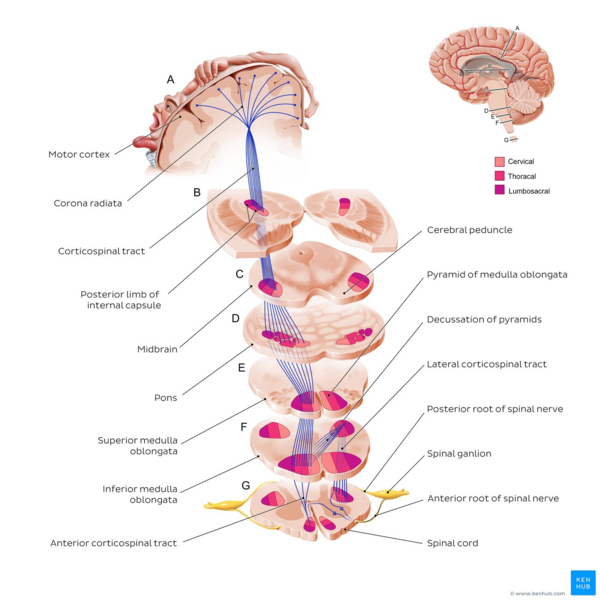
Corticospinal neurons (CSNs) are pivotal players in our nervous system, as they facilitate voluntary motor control, coordinating movements from the brain to the spinal cord. Recent advancements in neuroregeneration research have shed light on potential therapies to restore these essential cells, particularly in conditions like amyotrophic lateral sclerosis (ALS) and spinal cord injuries. By harnessing the power of niche resident progenitor cells, scientists are developing innovative strategies, such as stem cell therapy, to generate healthy corticospinal neurons in the lab. This remarkable breakthrough not only propels ALS research forward but also opens avenues for understanding and treating a range of neurological disorders associated with motor neuron degeneration. As we delve deeper into the mechanisms of neuroregeneration, the hope is to rejuvenate damaged nerve pathways, ultimately improving the quality of life for those affected.
Corticospinal neurons, often referred to as motor neurons, serve as the critical link between the brain and our muscle movements, making them fundamental to neurological function. The endeavor to rejuvenate these neurons involves exploring various avenues such as neurorestoration techniques and therapies derived from stem cells to aid recovery from debilitating conditions, including ALS and spinal injuries. By tapping into the latent potential of progenitor or precursor cells, researchers aim to establish methods for generating functional motor neurons in laboratory settings. This pursuit not only contributes to ALS research but also enhances our understanding of how to heal spinal cord injuries through regenerative medicine. The intersection of innovative approaches and cellular biology holds the promise of transforming treatments for neurodegenerative diseases, enabling better outcomes for affected individuals.
The Advancement of Neuroregeneration
Recent breakthroughs in neuroregeneration present promising avenues for treating neurodegenerative diseases and spinal cord injuries. Researchers have identified ways to effectively utilize progenitor cells, which are crucial in this regeneration process. These cells, classified as multipotent, possess the inherent ability to differentiate into specific types of neurons and other cell types. By understanding the mechanisms underlying their development, scientists can engineer conditions conducive to generating these vital cells in a lab setting. This advancement is particularly significant for patients with conditions like amyotrophic lateral sclerosis (ALS), where nerve damage prevents voluntary motor control.
The discovery of how to coax progenitor cells, especially those that can transform into increasingly specialized neuron types, is a game changer. Scientists are investigating the potential of these cells to facilitate the regeneration of corticospinal neurons (CSNs), specifically those affected by ALS and spinal cord injuries. The insights gained can also apply to other degenerative diseases, emphasizing the transformative potential of stem cell therapy in medicine. As ongoing research develops, the goal remains to transition these strategies from in vitro applications to practical therapies for patients in dire need.
Frequently Asked Questions
What are corticospinal neurons and their role in neuroregeneration?
Corticospinal neurons (CSNs) are vital cells responsible for voluntary motor control, mainly connecting the brain to the spinal cord. In the context of neuroregeneration, understanding CSNs is crucial as they are often damaged in conditions like ALS and spinal cord injuries. Recent studies focus on regenerating these neurons from progenitor cells to restore motor function.
How does stem cell therapy relate to corticospinal neurons?
Stem cell therapy is a promising approach to treat neurological disorders by regenerating damaged corticospinal neurons. Research indicates that specific progenitor cells can be coaxed to differentiate into CSNs, potentially offering new treatments for neurodegenerative diseases such as ALS and spinal cord injuries.
What advancements have been made in ALS research regarding corticospinal neurons?
Recent ALS research has made significant strides in understanding corticospinal neurons’ degeneration. Researchers have developed methods to grow functional CSNs from progenitor cells, creating models to investigate the disease’s mechanisms and possible treatments, paving the way for innovative therapies.
Can progenitor cells be used to repair corticospinal neurons damaged by spinal cord injuries?
Yes, progenitor cells can potentially be utilized to repair corticospinal neurons lost through spinal cord injuries. New techniques have shown promise in engineering these cells to replace damaged CSNs, which could lead to breakthroughs in treating spinal injuries.
What is the significance of the cocktail of molecular signals in corticospinal neuron research?
The cocktail of molecular signals is a groundbreaking development that enables progenitor cells to differentiate into corticospinal neurons more effectively. This approach helps researchers simulate the natural developmental processes, enhancing the potential for neuroregeneration in conditions like ALS and spinal cord injuries.
How does selective vulnerability of corticospinal neurons impact ALS and spinal cord injuries?
Corticospinal neurons exhibit selective vulnerability, meaning they are particularly susceptible to specific types of damage in ALS and spinal cord injuries. This selective nature necessitates targeted research and therapeutic strategies to effectively address the unique challenges posed by these conditions.
What future directions are being explored in the field of corticospinal neuron regeneration?
Future directions in corticospinal neuron regeneration involve optimizing the molecular signals used to derive these neurons from progenitor cells, as well as exploring transplantation and in-situ regeneration strategies. The aim is to develop effective therapies capable of repairing damaged neuronal circuits in the brain and spinal cord.
| Key Points | Details |
|---|---|
| Discovery of Corticospinal Neurons (CSNs) Regeneration | Researchers have found a method to regenerate corticospinal neurons, which are critical for voluntary motor control. |
| Progenitor Cells | Using molecular signals, they coaxed progenitor cells to differentiate into CSNs. |
| ALS and Spinal Cord Injuries | CSNs degenerate in ALS and are damaged in spinal cord injuries, affecting thousands in the U.S. |
| Importance of Progenitor Cells | Progenitor cells are already partly programmed for neurogenesis, making them ideal for regeneration studies. |
| NG2 Cells | The study focused on NG2 progenitor cells, which have the potential to produce neurons. |
| Potential Applications | This research opens avenues for regenerative therapies and understanding diseases connected to CSNs. |
| Future Research | Further studies are needed to transition from lab to living model animals and ultimately to human trials. |
Summary
Corticospinal neurons are pivotal for voluntary motor control, and recent discoveries by Harvard stem cell biologists have highlighted their potential for regeneration. By utilizing engineered progenitor cells, researchers have developed a method to cultivate these essential brain cells, promising new therapeutic avenues for neurodegenerative diseases like ALS and spinal cord injuries. This advancement not only enhances our understanding of CSN pathology but also sets the foundation for innovative regenerative therapies.